Features testimonials
Can I take collagen and vitamin c together?
Read Next Article
Enter your email address for your account and we’ll send a reset link.
New to Absolute Collagen? Join today!
Save 18% when you subscribe to a supplement
From just £19.20
Exclusive Absolute Rewards loyalty scheme
90 day money back guarantee
Edit, skip or cancel anytime
Free delivery & 18% off all recurring orders

You've unlocked Absoluter pricing discounts on our Deep Lift Skincare subscriptions when purchased with a Supplement subscription.

August is Hair Loss Awareness Month. And while hair loss is something many people experience, talking about it can still feel difficult.
Hair can be tied closely to how we see ourselves. So when it starts to change, thin or shed, the impact can go well beyond what we see in the mirror.
That’s why this month is a useful reminder to talk about hair loss openly, understand that different experiences can have different causes, and know that expert support is available.
To help us get the conversation started, we spoke to Eva Proudman, Absolute Collagen’s resident trichologist and hair and scalp specialist, who shares her expert advice on understanding hair loss, finding the right support and why talking about it matters.
“Hair loss can be such a debilitating condition, something which I see on a regular basis. It can also cover a wide spectrum of conditions, some of which can be addressed with simple solutions, and others requiring more complex treatment and investigation.”
For Eva, one of the most important first steps is understanding what may be behind someone’s hair loss and having a realistic conversation about what comes next.
“It is crucial to understand and have a realistic expectation of the outcome, whether that is treating the condition, managing it, or looking to cover the affected area.”
Hair loss can have a number of underlying causes, which is why getting the right professional advice matters. Eva explains:
“Hair loss can have many different underlying causes; it can be genetic, a sensitivity to androgens, lower than required dietary intake of protein, illness, stress or even past trauma. Health conditions such as thyroidism, diabetes and circulatory disorders are amongst the factors that can impact the health of the hair and scalp – with much focus also on the effect of menopause and perimenopause on potential hair loss and thinning.”
Hair is personal. It can be part of your identity, your style and how you express yourself. So changes to it can affect confidence too.
“It’s really important to understand that hair loss can leave people feeling desperately alone,” says Eva. “So, a supportive network is essential to provide reassurance and allow them to navigate during a difficult time where the affected person’s self-esteem can be very low.”
Her advice? Don’t feel you have to work it all out yourself.
“A good starting point is to seek the advice of a reputable Trichologist. Trichologists are well trained in understanding and empathising with the psychological impact of hair loss.”
A trichologist specialises in hair and scalp health and can help investigate what may be happening, discuss the options available and monitor progress.
“Guiding patients through their journey of hair loss and educating them on the options available is a key part of a trichologist’s role,” Eva explains.
“For conditions such as male and female pattern hair loss, photographs and scalp microscope images are taken at the start of treatment and reviewed following four to five months of treatment to see the effect on the hair.”
Depending on the individual and the condition, Eva says professional recommendations may include topical scalp applications, low-level laser light therapy or, where appropriate, oral medication.
“In cases of excessive hair shedding, dietary reviews and appropriate supplements can make a real difference and will often help to recover the hair back to normal. Scalp conditions such as seborrheic dermatitis and psoriasis can really benefit from trichological treatments and specialist shampoos to give relief and respite from these inflammatory recurring scalp conditions.”
Alongside investigating the reasons behind hair loss or increased shedding, Eva is a big believer in looking at your hair routine as a whole.
As she explains, that means thinking about how you care for your hair from the inside as well as the outside.
“One thing I always say to my patients is continue to take your Absolute Collagen supplement,” says Eva.
And when it comes to our collagen supplement, we’ve put it to the test.
The clinical trial also looked at the effects of collagen on hair, using expert hair and scalp assessment and self reported data.
After 12 weeks:
In all cases we saw initial improvements in skin and hair attributes at Week 6, with further improvements being recorded at Week 12.
Eva’s summer advice also puts the spotlight on what we do to our hair from the outside.
“We also, at this time of year especially, need to look at the outside of the hair,” she says.
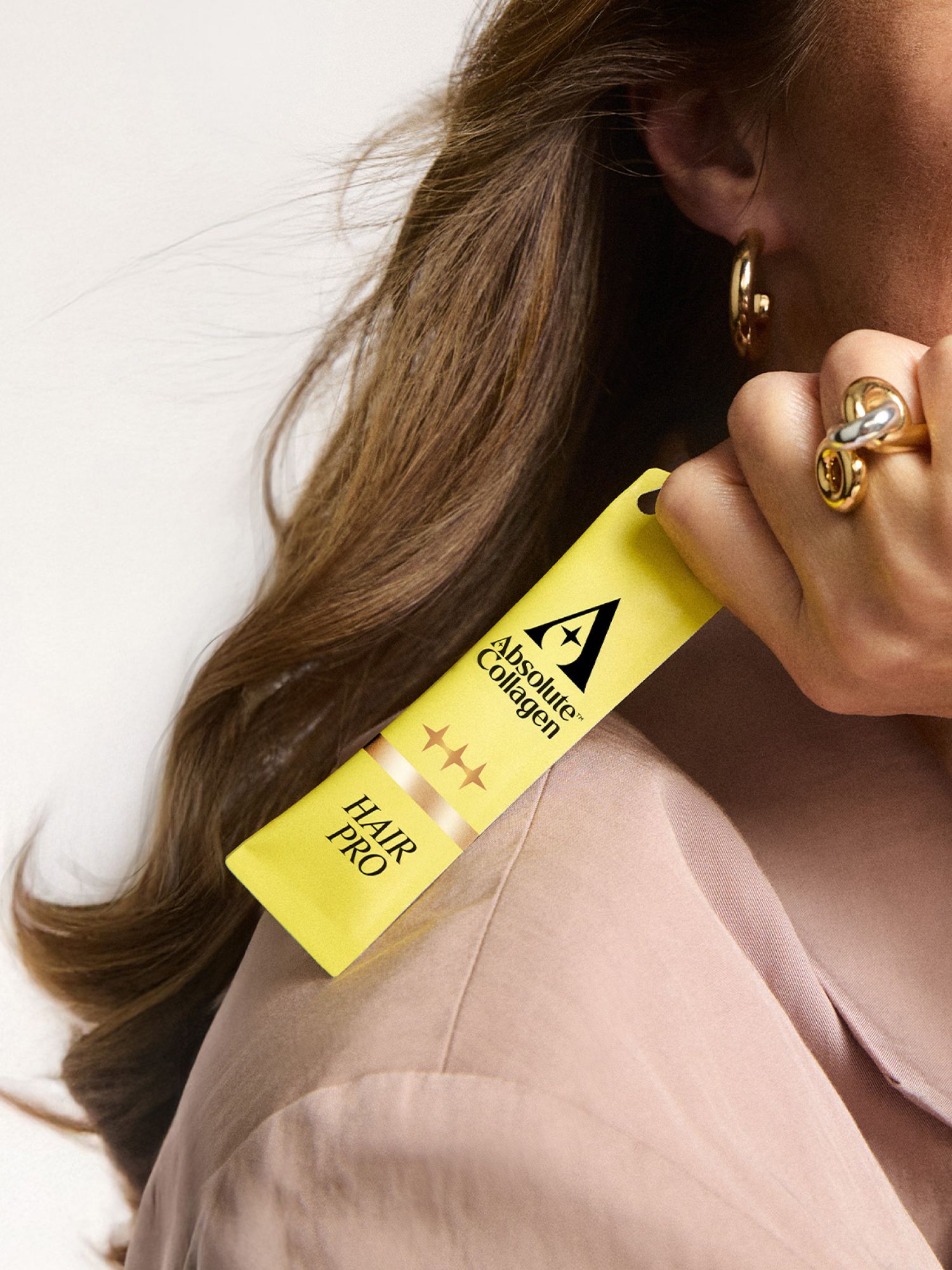
That’s where a consistent haircare routine comes in. Eva uses Collagen Shampoo and Conditioner alongside the supplement as part of her approach to caring for hair both inside and out.
So, while there’s no single answer to hair loss — and unexplained or persistent changes should always be discussed with an appropriate professional — looking after your hair can still be part of the bigger picture.
For Eva, it’s about consistency: understanding what’s happening with your hair, getting the right expert advice and finding a routine that works for you.
Hair loss can be complicated. The conversation around it doesn’t have to be.
“Part of my role as a Trichologist is to ensure that my patients recognise there is always help available and to remain hopeful,” says Eva.
“The Absoluter community are all so supportive of each other, openly sharing their hair loss stories and journeys, which is a real privilege for me as a Trichologist to be able to offer tips and advice on. It’s vital to remove the stigma around hair loss and I’m proud that the collective work of the Institute of Trichologists is playing a key part in this movement.”
So this Hair Loss Awareness Month, talk about it. Share your experience if you want to. Listen to someone else’s. And if something about your hair or scalp is concerning you, seek professional advice.
Because hair loss deserves a conversation - not a stigma.
For further information and support, visit Alopecia UK at alopecia.org.uk or find @AlopeciaUK on Instagram.