Features testimonials
Everything you need to know about collagen banking.
Read Next Article
Enter your email address for your account and we’ll send a reset link.
New to Absolute Collagen? Join today!
Save 18% when you subscribe to a supplement
From just £19.20
Exclusive Absolute Rewards loyalty scheme
90 day money back guarantee
Edit, skip or cancel anytime
Free delivery & 18% off all recurring orders

You've unlocked Absoluter pricing discounts on our Deep Lift Skincare subscriptions when purchased with a Supplement subscription.
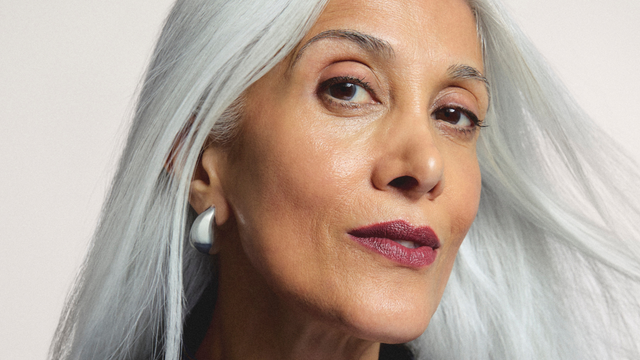
You may have heard people talking about the collagen cliff. For many women, it describes a very real experience: feeling exactly the same on the inside, while noticing rapid changes in their skin, hair and appearance during perimenopause and menopause.
As Absolute Collagen’s co-founder Darcy Laceby explains:
"The collagen cliff is real and a lot of women are not imagining it."
While collagen production naturally declines as we age, hormonal changes can make those shifts feel more noticeable, more sudden and, for some women, as though they've happened overnight.
One day your skincare routine feels like it's working as it always has. Then seemingly overnight, skin can appear less firm, fine lines become more noticeable and your complexion doesn't quite look the same.
This isn't about ageing suddenly speeding up. It's about understanding what happens beneath the surface when collagen levels decline.
In this guide, we'll explore:
Collagen is the structural protein that helps give skin its firmness, elasticity and strength.
Our natural collagen production begins to decline from our mid-20s. For years, those changes are gradual. But for many women, the effects become much more noticeable during their 40s and around menopause.
This period is often referred to as the collagen cliff - the point where declining collagen becomes increasingly visible in the skin.
During perimenopause, fluctuating and declining oestrogen levels can affect skin hydration, elasticity and collagen levels.
As Darcy explains:
"During perimenopause, oestrogen fluctuates and eventually it declines, and that can affect skin dryness, skin elasticity as collagen also declines with it."
This is why many women report their skin suddenly feeling different, even if their routine hasn't changed.
The collagen cliff can show up in ways that feel surprisingly sudden. Many women describe:
As Darcy puts it:
"Skin can often really quickly overnight feel a lot drier. Make-up might sit differently. You might have thinner hair, and you might feel an increase in fine lines and wrinkles as well."
As she also points out:
"But that isn't vanity. That's just biology - and it's really, really happening."
By the time we reach our 40s, years of gradual collagen decline can start to become more visible.
Many women find that the products and routines they've relied on for years no longer seem to deliver the same results.
That's because collagen sits deeper within the skin's structure. When collagen levels reduce, skin can lose some of the support that helps it maintain its firmness and elasticity.
This is why conversations around collagen after 40 have become increasingly important. Rather than focusing solely on what goes onto the skin, many women are looking at how they can support their skin from within.
Some women are also exploring the concept of collagen banking - the idea of supporting collagen levels before visible changes become more pronounced. While collagen production naturally begins to decline from our mid-20s, establishing consistent habits earlier may help support skin as it ages.
Read our guide to collagen banking to learn more.
Not quite.
The collagen cliff refers to the more noticeable decline in collagen that many women experience during their 40s and around menopause.
Collagen banking on the other hand, is the idea of supporting collagen levels before those changes become more visible. While you can't stop the natural ageing process, many women choose to take a proactive approach to supporting their skin long before they reach the collagen cliff.
One of the reasons the collagen cliff resonates with so many women is because it can create a disconnect between how they feel and what they see in the mirror.
As Darcy explains:
"It's a real disconnect between how you're feeling on the inside and the faster, hormonal-driven changes that are happening on the outside."
For many women, the goal isn't to look younger. It's simply to feel like the person they already are.
The collagen cliff isn't something to fear, and it isn't something to panic about.
As Darcy explains:
"The point isn't to panic about ageing. It's learning to support yourself properly and knowing what works for you."
Supporting your skin during perimenopause and menopause is often about looking at the bigger picture. That might include:
A collagen supplement can then become part of that wider wellbeing routine.
As Darcy explains:
"Collagen can be an amazing supplement stack on the side of that."
No. As Darcy says:
"Collagen isn’t a menopause treatment. It won't stop ageing."
Instead, collagen supplementation can support a broader skin, health and wellbeing-focused routine.
When choosing a collagen supplement, it's important to look for:
Because, as Darcy explains:
"With collagen supplementation, consistency really, really matters."
The goal isn't to stop the ageing process. It's to support your body through the biological changes that naturally occur over time.
Absolute Collagen isn't built on anecdotal results - it's supported by large-scale clinical testing.
As Dr Dave Reilly, Senior Scientist and lead researcher on the clinical trial at Absolute Collagen, explains:
"In all cases we saw initial improvements in skin and hair attributes at Week 6, with further improvements being recorded at Week 12. The scale of this study allows us to see consistent, measurable improvements across a wide population - which is rare in supplement research."
Collagen supplementation is particularly relevant for:
It's not about changing who you are - it's about supporting your skin as it changes.
The collagen cliff isn't about losing yourself. It's about understanding what's changing and knowing how to support yourself through it.
As Darcy says:
"The goal isn't to look 25. It's just to feel good in yourself and good in your skin. It's to recognise yourself again in the mirror and say, yeah, that's me and I've got this."
At Absolute Collagen, we believe ageing isn't the problem. Losing collagen is. That's why we're committed to helping women support their skin with a simple daily habit backed by science, consistency and clinically proven results.
Back your skin. Back your biology. Back yourself.