Features testimonials
Losing weight during menopause: what actually works?

Read Next Article
Enter your email address for your account and we’ll send a reset link.
New to Absolute Collagen? Join today!
Save 18% when you subscribe to a supplement
From just £19.20
Exclusive Absolute Rewards loyalty scheme
90 day money back guarantee
Edit, skip or cancel anytime
Free delivery & 18% off all recurring orders

You've unlocked Absoluter pricing discounts on our Deep Lift Skincare subscriptions when purchased with a Supplement subscription.

You’ve heard all about gut health. It’s the wellness world’s favourite topic. From kombucha to kimchi, the conversation around microbiomes and digestion isn’t slowing down anytime soon. And somewhere in the mix, collagen tends to come up too. So let's get straight to it - is collagen good for gut health? The short answer? It can play a supportive role.
Not as a quick fix or a one-size-fits-all solution – but as something that supports your wellbeing over time. Think steady support, not overnight transformation.
Here’s how collagen for gut health works:
Before we get into collagen, it helps to understand the gut lining. Think of it as a carefully structured barrier. Its job is to let nutrients pass through into your bloodstream, whilst keeping unwanted substances where they should be.
This is where collagen comes in. It’s a major component of the connective tissue that makes up your gut lining. When everything is working well, your body can absorb nutrients efficiently, and your digestive system tends to feel more balanced.
Over time, factors like stress, diet, and ageing can influence how well this barrier functions. You might hear this described informally as a ‘weakened’ or ‘compromised’ gut lining. It’s not a formal medical diagnosis, but rather a way of describing changes in how the gut barrier behaves.
When this happens, things that should stay inside the gut can leak into the bloodstream. We’re talking proteins, toxins, or particles that can trigger inflammation in the gut.
“Collagen supplements can help to alleviate symptoms related to poor gut health. Some of the amino acids released following collagen digestion are important regulators of inflammation and help maintain a healthy gut.” - Dr Dave Reilly, Senior Scientist at Absolute Collagen
The connection between collagen and gut health comes down to structure and support.
Your gut lining is constantly renewing itself. To do that, your body uses amino acids - the building blocks found in protein. Collagen is a source of amino acids (including glycine and glutamine) which are involved in many processes within the body, including those linked to the maintenance of tissues like the gut lining:
As we age, natural collagen production declines. That’s just biology. Adding collagen to your routine is one way to help top up your intake of these amino acids, supporting your body as it does what it already does.
It’s important to be clear here. Collagen supplements aren’t intended to treat or manage medical conditions. If you’re dealing with ongoing or severe digestive issues, it’s always best to speak to a healthcare professional. That said, research into collagen and digestion is growing.
Some early studies have explored how collagen may interact with the gut lining, particularly in relation to its structure and function. But this is still an evolving area, and more research is needed. For general wellbeing, some people choose to include collagen as part of a broader, balanced approach to supporting their gut.
“Although we know that supplementing with collagen for 12 weeks significantly improves symptoms such as abdominal pain and bloating compared to a placebo, more research is needed to assess if this benefit also works for people with IBS.” - Dr Dave Reilly, Senior Scientist at Absolute Collagen
For some women, adding collagen to their routine may help to soothe general stomach discomfort. Taking collagen, in conjunction with a healthy, balanced diet, may have some benefits for your skin, hair, and gut. But while collagen can be a great supplement, it’s best to speak to your doctor before taking it, especially if you’re experiencing significant gut problems or if you have yeast-related gut issues.
Taking collagen in this context may contribute to a build-up of oxalates (natural compounds found in plants) in the body, which can increase the risk of kidney problems.
“High oxalates can be caused by genetic and dietary factors, including plant and animal based protein. Oxalates tend to accumulate slowly, and it’s important to check with your GP and get tested before embarking on any treatments to reduce oxalates.” - Dr Dave Reilly, Senior Scientist at Absolute Collagen
If you want to start taking collagen, the key is consistency. A daily dose is what you’re aiming for.
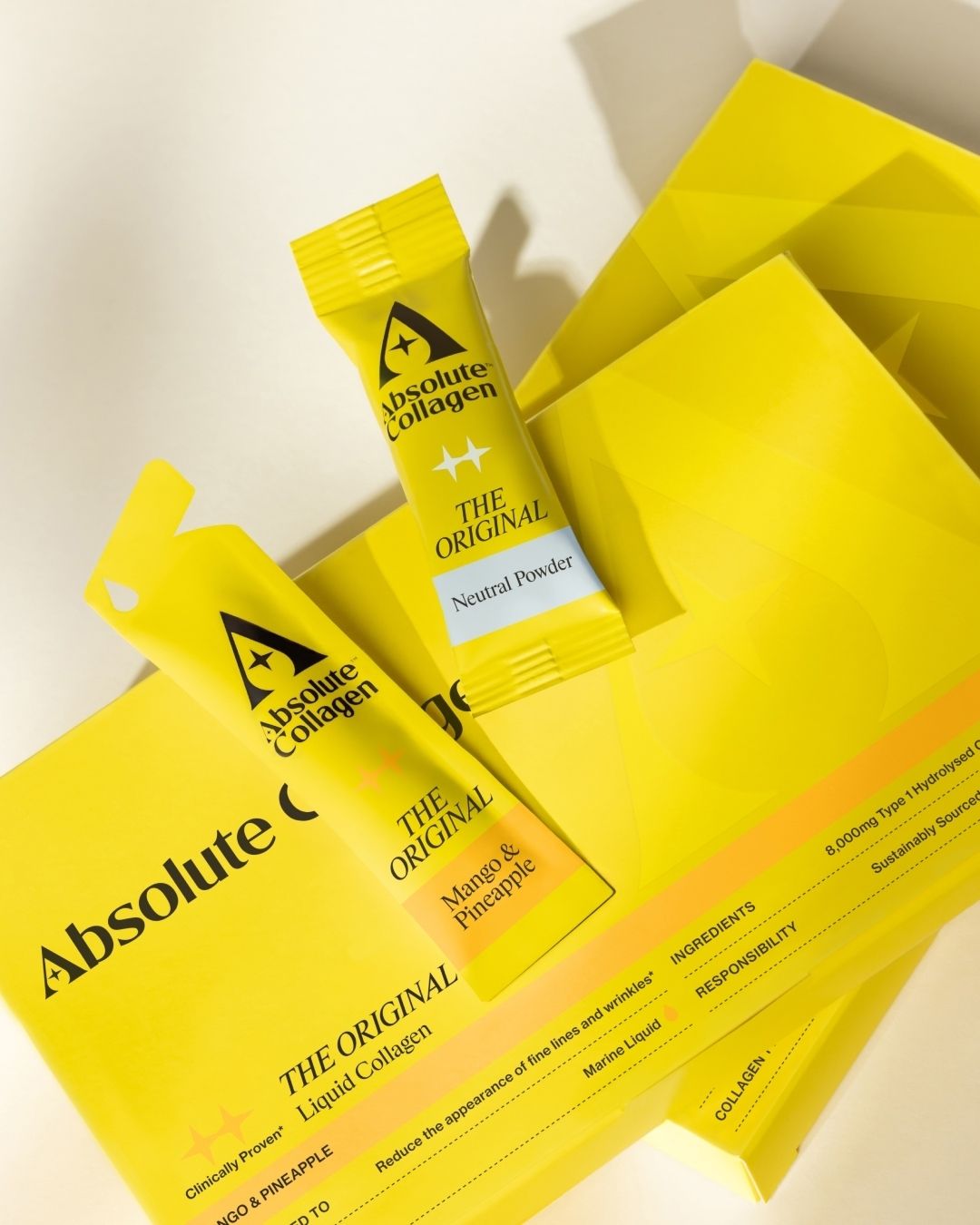
Liquid collagen supplements or powder collagen supplements are a great efficient option. They’re hydrolysed, meaning the collagen is already broken down into small, absorbable peptides. Your body can put them to work, fast. Just a quick, simple dose in the perfect way to suit your routine. Fruity sachets on-the-go, or pre-measured, mixable powders added to food or drinks. The choice is yours.
At Absolute Collagen, all our collagen supplements provide an optimal 8,000mg dose of hydrolysed collagen infused with vitamin C to maximise absorption. Pair it with a varied diet that includes fibre, whole foods, and protein, and you’ve got a well-rounded approach that supports your body from the inside out.
Ready to go further? Visit our blog for more expert nutrition insights, skincare advice and wellness tips to help you feel strong and empowered in your own body.