Features testimonials
Why collagen declines after 25, and how to support it with science.

Read Next Article
Enter your email address for your account and we’ll send a reset link.
New to Absolute Collagen? Join today!
Save 18% when you subscribe to a supplement
From just £19.20
Exclusive Absolute Rewards loyalty scheme
90 day money back guarantee
Edit, skip or cancel anytime
Free delivery & 18% off all recurring orders

You've unlocked Absoluter pricing discounts on our Deep Lift Skincare subscriptions when purchased with a Supplement subscription.
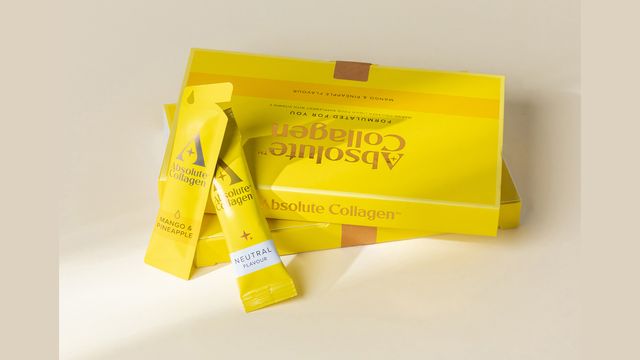
For some, that’s about lifestyle. For others, it’s about faith. And both deserve clarity.
At Absolute Collagen, our Marine Collagen Supplement community spans cultures, countries and belief systems – and even here in the UK, dietary practice plays an important role in everyday life.
So, let’s keep this simple. Below, we explain how marine and bovine collagen sit within common religious and dietary frameworks. This includes kosher, halal, vegetarian, pescatarian and fasting practices.
No assumptions. Just clear answers.
In Islam, foods are classified as halal (permitted) or haram (not permitted).
Whether bovine collagen is halal depends entirely on how the animal was slaughtered. For meat-derived products to be halal, animals must be slaughtered according to Islamic guidelines.
Our Essential Blend powder (which is a mixture of bovine and marine collagen) is not sourced from halal-slaughtered cattle and is therefore not suitable for a halal diet.
Good news: our marine-only collagen is halal-certified, meaning that it is suitable for those following a strict halal diet.
However, we do still recommend consulting a trusted religious authority for personalised guidance if you’re still not sure.
In Judaism, foods are considered kosher if they meet specific dietary laws around permitted animals and preparation methods.
Not all marine collagen is automatically kosher.
For a fish to be kosher, it must have both fins and scales. This means shellfish and crustaceans are never kosher.
Marine collagen simply means collagen derived from marine life. Some marine collagen supplements include shellfish - which would make them non-kosher immediately.
Our marine collagen does not contain shellfish or crustaceans. It is derived from tilapia and pangasius fish. Tilapia is widely accepted as kosher. Pangasius has fins and scales, but because it’s related to catfish (which is not kosher), there are differing opinions within the Jewish community.
Because of this grey area - and out of respect for kosher observance - our marine collagen should not be considered kosher.
Cows are a kosher species. However, for a product to be kosher, the animal must be slaughtered and processed according to Jewish law, under kosher supervision.
Our bovine collagen is not kosher certified and is not produced under kosher supervision. It should therefore be assumed to be non-kosher.
In short: neither our marine nor bovine collagen is suitable for those strictly following a kosher diet. If you observe kosher dietary laws, we recommend seeking guidance from your rabbi or religious authority.
This depends on the type of fast you’re observing.
Collagen is an animal-derived protein. From a biological perspective, consuming collagen provides calories and nutrients, meaning it would break a fast that restricts food and drink intake entirely.
For religious fasting (such as during Ramadan, Yom Kippur, or other observances), collagen should be treated the same as any other ingestible supplement. This means it would break the fast if taken during fasting hours.
For intermittent fasting, collagen will also technically break a fast, as it contains protein and calories.
If you’re fasting for religious reasons, we recommend taking collagen outside of fasting hours. And as always, if you’re unsure, speak to a trusted religious authority for guidance.
If you’re fasting for religious reasons, we recommend taking collagen outside of fasting hours. And as always, if you’re unsure, speak to a trusted religious authority for guidance.
No, collagen is an animal-derived protein. There is no such thing as vegan collagen.
Bovine collagen comes from cows
Marine collagen comes from fish
As a result, neither form is suitable for vegetarians or vegans.
Yes, our marine collagen is derived from fish skin and is suitable for pescatarians.
We only use fish that are farmed for human consumption. The collagen itself is a by-product, which means it helps to reduce waste rather than create it.
As a result, neither form is suitable for vegetarians or vegans.
Jain dietary practices are among the strictest in the world, centred around non-violence and the avoidance of harm to living beings.
For this reason, all collagen - both marine and bovine - would be prohibited under Jain dietary rules.
Dietary practices vary widely within both Hinduism and Buddhism.
Many followers observe vegetarian diets, though not all. Compassion and non-harm are central principles.
Marine collagen may be acceptable for those who consume fish.
Bovine collagen is not appropriate for Hindus, as cows are considered sacred.
As practices vary by region and individual belief, guidance from a trusted authority is always recommended.
Dietary needs are deeply personal. And faith is personal too.
To summarise:
Our marine collagen is halal-certified, but it’s not kosher
Our marine collagen is also suitable for pescatarians
Our Essential Blend powder is halal-certified, but it’s not kosher
Our collagen is not suitable for vegetarians, vegans, or Jain diets
Bovine collagen is not appropriate for Hindu diets
If you’re ever unsure, check with your religious authority, and if you have questions about our ingredients or sourcing, just get in touch with our team. You can also head over to the Collagen Lab for more on the science behind collagen.