Features testimonials
The collagen cliff: understanding collagen loss after 40 and menopause.

Read Next Article
Enter your email address for your account and we’ll send a reset link.
New to Absolute Collagen? Join today!
Save 18% when you subscribe to a supplement
From just £19.20
Exclusive Absolute Rewards loyalty scheme
90 day money back guarantee
Edit, skip or cancel anytime
Free delivery & 18% off all recurring orders

You've unlocked Absoluter pricing discounts on our Deep Lift Skincare subscriptions when purchased with a Supplement subscription.

Collagen. The protein behind glowing skin, stronger-looking hair, and healthier-looking nails.
But what’s the secret ingredient that makes it work so well? The answer is simple: amino acids.
Think of them as your body’s building blocks. And when it comes to collagen, the specific combination of these blocks is what makes all the difference.
Let's get into what you need to know about the amino acids in collagen and why they’re the key to unlocking its power.
Amino acids are the tiny units that link together to form proteins. In fact, collagen is the most abundant protein in the body.
Amino acids build everything from muscle tissue to enzymes and, yes, your skin, hair, and nails.
Your body needs 20 different amino acids to function. These are:
Your body can make some of these amino acids itself. Others need to come from your diet.
But when it comes to repairing and building tissues like skin and cartilage, your body needs a very specific set of amino acids.
That’s where collagen comes in.
Not all proteins work in quite the same way.
What makes collagen different from other protein sources is its unique blend of amino acids. We call this the collagen amino acid profile.
Collagen contains 19 of the 20 amino acids. It only lacks tryptophan, so it isn’t classified as a ‘complete protein’. A complete protein would contain all 20 of these amino acids.
Still, that doesn’t diminish its importance. Collagen’s amino acid composition is unlike anything else found in nature.
Why? Because the collagen amino acid profile is dominated by 3 key players that you won’t find in such high concentrations anywhere else.
This profile is what makes collagen particularly suited to supporting skin, hair, nails, and connective tissue. It delivers the exact raw materials your body needs to build and repair these specific tissues.
While collagen contains 19 amino acids, 3 of them do the heavy lifting: proline, glycine and hydroxyproline. They make up the majority of the protein and are responsible for its incredible benefits.
Glycine is the most abundant amino acid in collagen, making up about a third of the entire collagen protein.
This tiny amino acid has a massive job. Its small size allows the collagen fibres to pack together tightly, creating the strong, stable structure that gives your skin its firmness and your tissues their resilience.
Think of it as part of the structural foundation that helps skin stay firm and resilient. More glycine means a stronger, more organised structure.
Next up is Proline. It works hand-in-hand with glycine to maintain the collagen helix structure.
Proline’s main job is to provide rigidity and stability. It’s the scaffolding that helps the entire structure hold its shape. This is crucial for everything from helping maintain skin structure to supporting your joints and arteries.
It’s also a key player in wound healing and tissue repair.
Essentially, it stabilises the collagen structure.
This one is special. Hydroxyproline is a modified version of proline, and it’s almost exclusively found in collagen. Its presence is what makes collagen, well, collagen.
Without enough hydroxyproline, the entire collagen structure becomes unstable and weak. This amino acid helps give collagen its strength and stability.
So, what makes collagen’s amino acid profile so special?
It’s all about the combination. Glycine, proline, and hydroxyproline work together in a way that’s unique to collagen.
When these amino acids link together, they form collagen’s triple-helix structure – a tight, rope-like shape that provides remarkable strength and stability.
Research suggests that certain collagen peptides may also help support the body’s natural collagen production processes. In other words, it delivers the specific amino acids and peptides involved in maintaining skin, hair, nails, and connective tissue.
That’s what makes collagen different. It’s not simply about consuming more protein - it’s about consuming the right combination of amino acids and peptides.
“Hydroxyproline is so rarely found in any other animal or plant proteins, that it can be thought of as a ‘forensic fingerprint’ used to identify collagen in tissues. Collagen peptides containing hydroxyproline are uniquely potent for delivering benefits to skin, hair and nails. No other protein or amino acid can compete with that.”
Dr Dave Reilly - Senior Scientist at Absolute Collagen
Collagen levels decline after 25. This can lead to drier skin, more brittle nails, and less healthy-looking hair. That’s why taking collagen is so important.
Since collagen is made of amino acids, collagen supplements affect your amino acid levels too.
Once consumed, the peptides are broken down during digestion into amino acids and smaller peptide chains.
Then, your body gets to work using these amino acids:
So, when you take a supplement, you’re doing more than just topping up. You’re delivering the precise amino acids for collagen production. You’re giving your body the tools, the shortcut, and the instructions.
And don’t forget to take vitamin C with your collagen. It’s the essential helper that allows your body to convert proline into that all-important hydroxyproline.
You may be wondering, if proteins contain amino acids, why not just eat more protein to get those same benefits?
The difference is that collagen provides your body with a uniquely concentrated combination of specific amino acids. These amino acids can then be used by the body as part of its natural collagen-building processes.
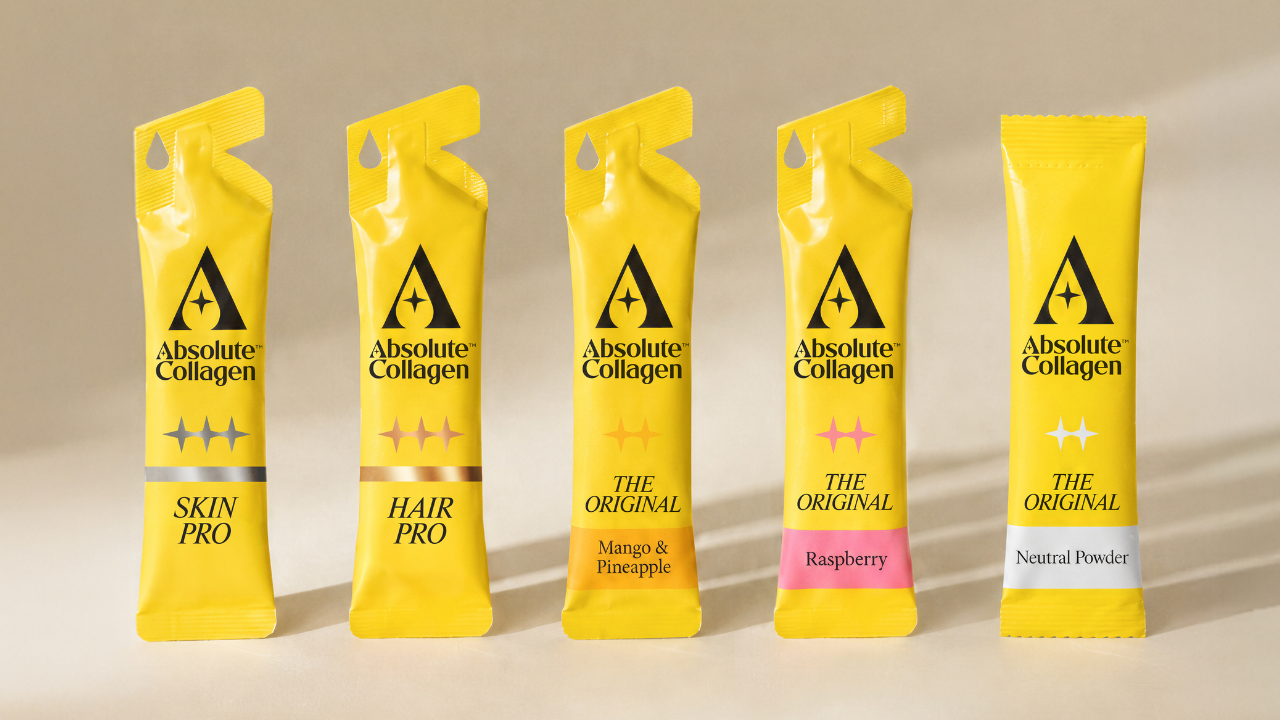
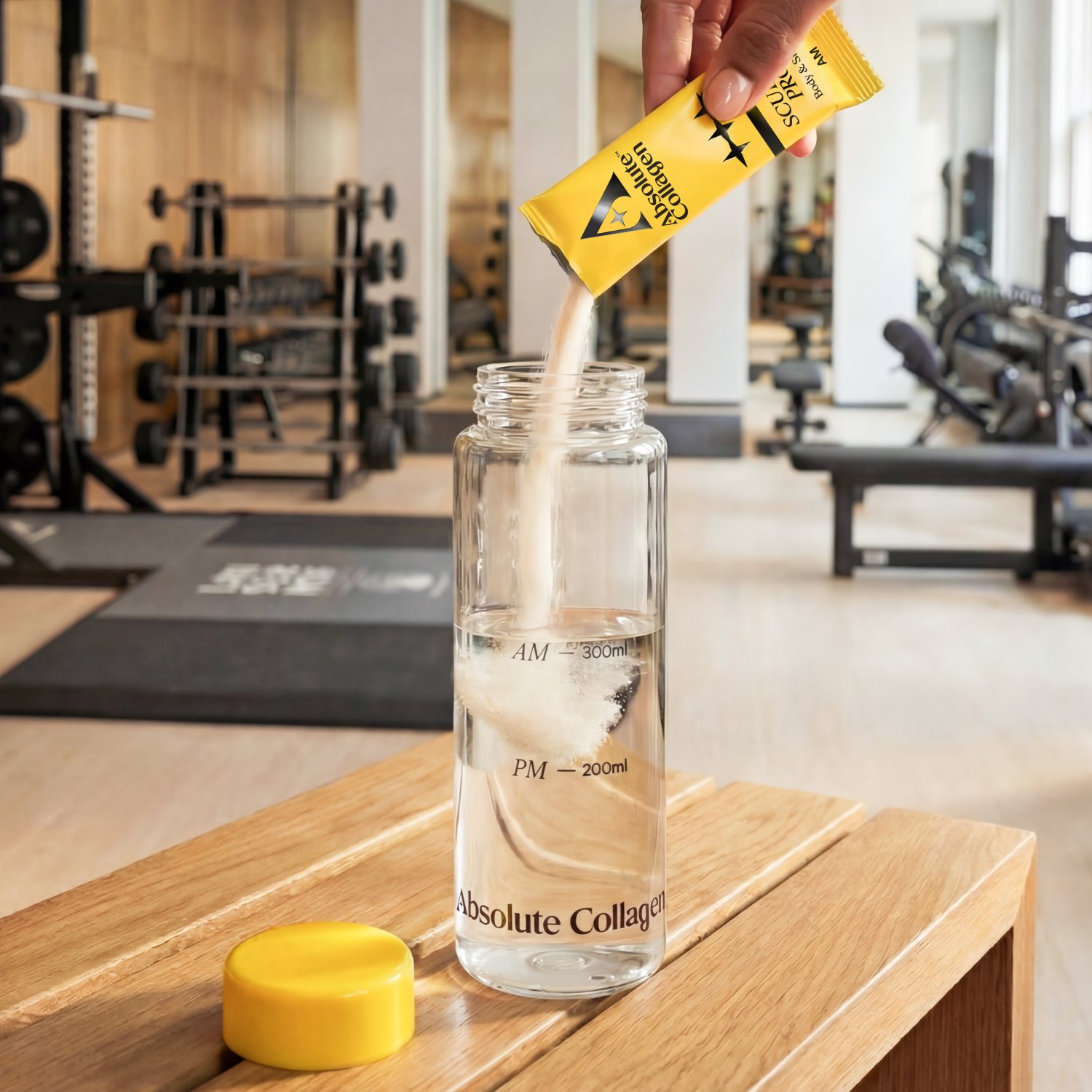
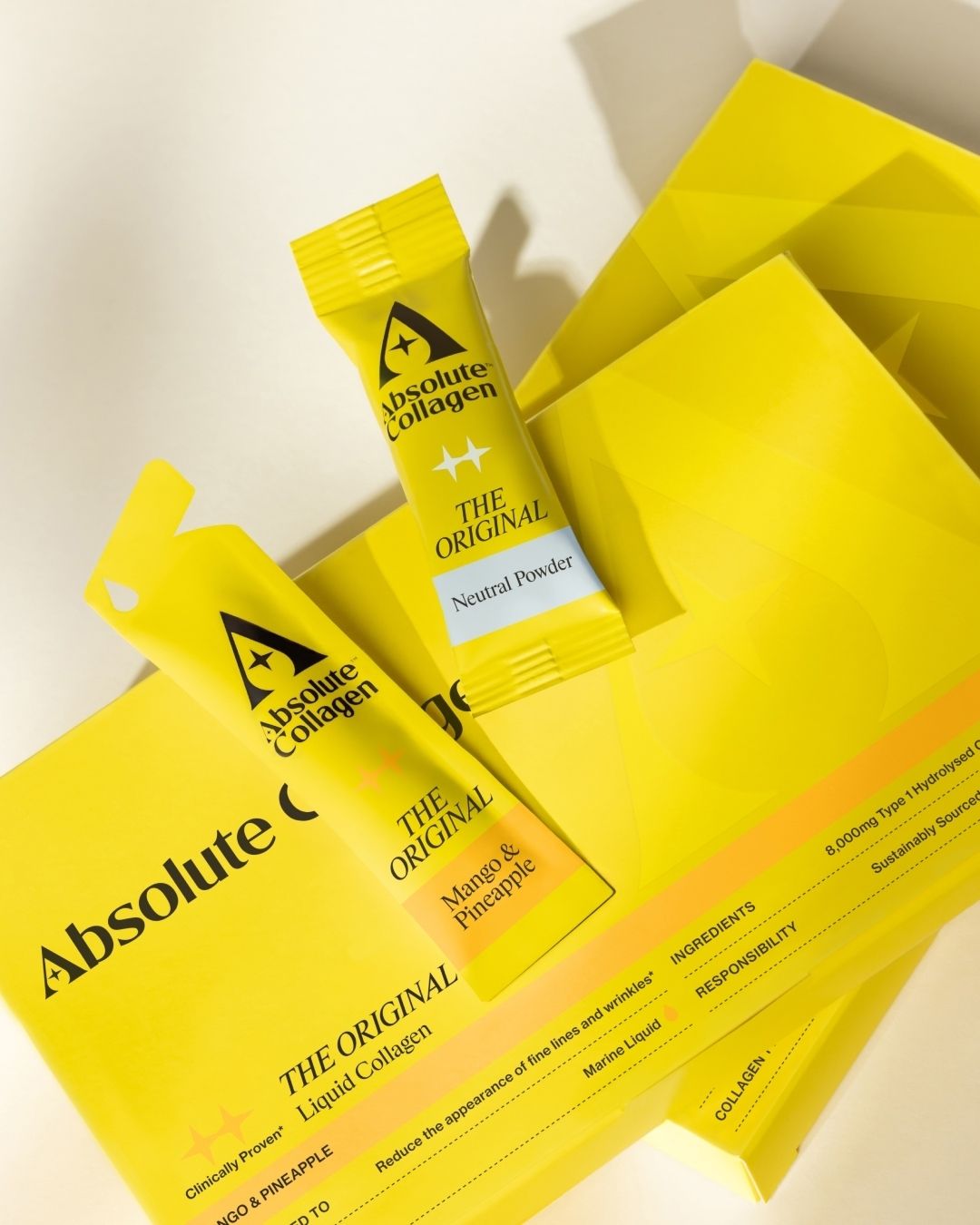
Both our liquid collagen and collagen powder contain hydrolysed collagen, meaning the protein has already been broken down into smaller peptides for easier absorption. This allows your body to absorb and utilise them quickly and efficiently. Rather than relying on digestion alone to create the right building blocks, you’re supplying your body directly with that unique amino acid profile - especially glycine and proline. The added vitamin C will then make hydroxyproline, completing the uniquely strong protein, collagen that helps support skin, hair and nail health.
Don’t just take our word for it. The proof is in the results. In our clinical trial - the world’s largest collagen supplement trial - 100% of women saw improvements in skin evenness, fine lines and wrinkles after just 12 weeks of taking our collagen supplement.
Ready to support your skin and feel amazing? Explore our collagen supplements or head over to our blog for more expert tips on feeling strong, nourished, and confident - every single day.